
The research behind the Atlas


Where it started
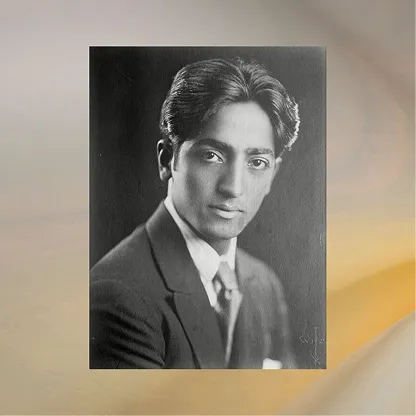
The project began during philosopher Shai Tubali's postdoctoral year at the University of Leeds, at the Arts and Humanities Research Institute. A single question to sit with.
Jiddu Krishnamurti — an educator whose work gave rise to eight schools across the UK, the United States, and India — first heard of artificial intelligence in 1980, at the age of eighty-five. What disturbed him was not that machines might seize control. It was something more exacting: a human mind already reduced to mechanical purposes could be superseded by intelligent machines, and human life would then be left without meaning.
If the machine can take over everything a person can do, and do it still better, then what is a human being — what are you?
That question shaped the year of work at Leeds. And then it travelled into education.
If the machine can take over everything a student can do, then what is education for?
Modernity trained us to judge only the outcome — the shoes, the laptop, the essay — and to forget who made
them, when, why, with what intention. AI takes this habit to its limit. A poem in the style of Shakespeare:
scholar or chatbot? Toss a coin. But the process and the source remain completely different, and that difference
matters.

From Philosophy to Educational Research
The question that shaped everything next was this. Could the deeper capacities of a human being — the ones AI cannot perform — actually be practised? Could a classroom become a place where a student meets not only what AI can do, but what they themselves are? That question moved Tubali out of philosophy.
The project could not stay where philosophy usually stays — in the study, in the journal, at the academic conference. The stakes felt too immediate for that. A generation of young people is now growing up inside AI. The question of what remains of them, when the machine has taken over so much of what school once asked them to do, cannot be answered from a library.
Education is the site where human formation takes place. What is not cultivated there rarely appears elsewhere. If the human capacities the AI age is asking us to cultivate — presence, discernment, moral weight, real encounter — are to survive, education is where the question of their survival will be answered.

The doctoral research at UCL
The work is now unfolding as doctoral research at the UCL Institute of Education — the world's leading institute of education — under Wayne Holmes and Paul Standish, and affiliated with the UNESCO Chair in the Ethics of AI and Education.
Its first outcome is the Atlas of Human Capacities: a map of six continents in which human being takes place. Presence, Embodiment, Discernment, Agency, Relation, Formation. Thirty-six capacities within them. Some visibly under strain in the AI age. Others still almost invisible — capacities our culture has never been asked to name. But a map is not the territory. A capacity described on a page is not a capacity cultivated in a life.
The next stage is a co-design with teachers and students in a real school. Teachers as collaborators. Students as genuine participants inthe inquiry. What the Atlas names as possible, the classroom shows as practised, or reveals as still out of reach.
The question threading this stage: do students come to recognise a middle path — between total reliance on AI and total independence from it — that retains a genuine sense of selfhood?
Where such a path is found, the work of the classroom is to make it visible. Where it is not, the absence itself becomes the finding.
The findings are offered not as a universal blueprint, but rather as a rigorously examined case that other schools, other educators, and other researchers can carry into their own contexts.

When students think AI text is better because it looks more polished, they confuse form and function. The
form may be perfect — every sentence statistically modeled — but there is no meaning, because no human
originated it with an idea or intention in mind. A text written with mistakes by someone with a genuine point
is worth a thousand times more than a polished one with nothing behind it.