
An Atlas of Human Capacities in the Age of AI

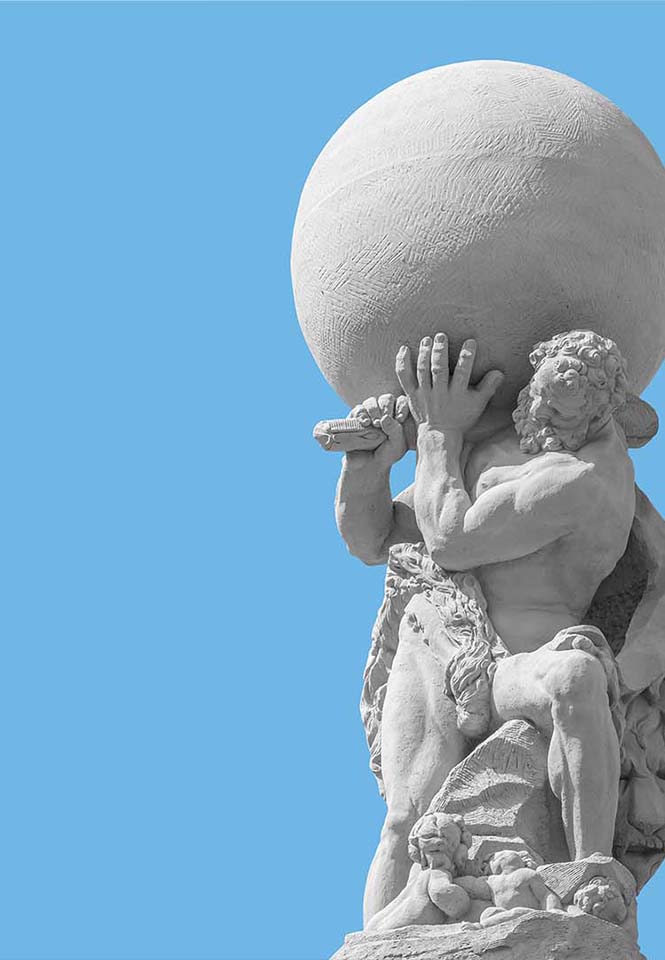
An atlas is a living map. It is revised as we go further, expanded as we discover new territory. The capacities it charts are dimensions of being human that either deepen through attention and practice, or quietly recede through neglect. They are already yours. The atlas does not grant them. It names them, so you can find your way back.
Six continents. Each one a question. Each question a world within you. At the centre, where the two rivers meet: Wisdom. Surrounding everything, pressing at every shore: the ocean of AI — not an enemy, but the condition in which these capacities must now be deliberately tended.
Enter a continent. Let the question do its work.
The biggest challenge is that we will lose the capacity and the opportunity to take charge of our own decisions and our own will. More and more, we will potentially let it be done by AI — which means being done by someone else outside of ourselves. Take that to the extreme, and we become spectators of our own lives, rather than the actors.

Six continents of human capacity
Each question is already alive in you. The atlas simply asks you to look.
“Am I actually here?”
Take a breath. Feel the weight of your body in the chair. Notice that something in you is reading these words, attending to them, present to this moment rather than simply processing information. That attending — simple, immediate, often overlooked — is the ground beneath everything else. Presence spans from the basic act of sustaining attention long enough to truly encounter something, all the way to the rarest experience of awareness knowing itself with nothing in the way. Most of us live somewhere in between, in a life that moves too fast to be fully inhabited.
“Am I alive in a body?”
Your hands are resting somewhere as you read this. Your breath is moving without your having to think about it. Your body is doing a thousand things at once that no mind could consciously manage. This is not background noise. It is the ground of everything you know, feel, and make. Perception, skill, the capacity to be moved — all of it happens through a creature that breathes, ages, aches, and marvels. The question is whether you live there, or whether you have become a mind that merely carries a body around.
“Is this real? Is this worth wanting?”
You are surrounded, every hour, by content that is confident, fluent, and well-packaged. Some of it is true. Some of it is empty. Some of it is designed to feel meaningful while leaving you unchanged. Discernment is the capacity to tell the difference — to sense when something is wrong before you can articulate why, to recognise beauty from mere cleverness, to sit with a genuine question rather than accept the nearest comfortable answer. In an age of infinite convincing content, this capacity is something close to an inner compass.
“What will I do? What will I refuse?”
There is a particular feeling that comes with a decision that costs something — when you say no to what is convenient, or commit to something without any guarantee of success. That feeling is the weight of genuine agency. It is you, as aperson with a conscience and a future, standing behind your own choices. As frictionless tools make every decision smoother, that feeling becomes rarer. And with it goes something essential: the experience of being the actual author of your own life.
“Who is actually there?”
Think of a moment when someone truly saw you — when their attention was so fully present that you felt, unmistakably, that another person was there. And think of the reverse: the conversation that had every word right but left you strangely alone. The difference between those two experiences is what this continent maps. Relation, in its full depth, is the capacity to meet genuine otherness: another person who surprises you, resists you, and in doing so, reveals something in you that you could not have found alone.
“What am I becoming?”
Think of something you once worked at for a long time —something difficult, requiring effort and failure and return. Not the outcome. The process. The way you were different at the end of it, changed by the struggle itself. That is what formation means: the slow, often uncomfortable work of becoming someone. Capacities are trajectories, not possessions. They deepen through practice or they recede through avoidance. The question is whether the life you are living is forming you into someone, or simply moving you efficiently from one moment to the next.
At the Centre: Wisdom
Wisdom is what happens when all six capacities are alive together — the inner compass that knows when action must yield to stillness, when speaking must yield to listening, when doing must return to being. Every thinker in the Atlas, from every tradition, points toward it by a different name. It is where the two rivers meet.
In a sense, super-intelligence is already here: it is the collective intelligence of all of us, only achieved by interacting with each other. If we really want the super-intelligence that big tech is promising us, we had better look at our collective capability to work together — to contribute to each other and to remain curious. That is what makes us moving forward as some parts of our intelligence are replaced by machines.